PointAI Founder Nitin Vats Takes India’s AI Innovation Story to the UK Parliament
Oct 28, 2026
VMPL
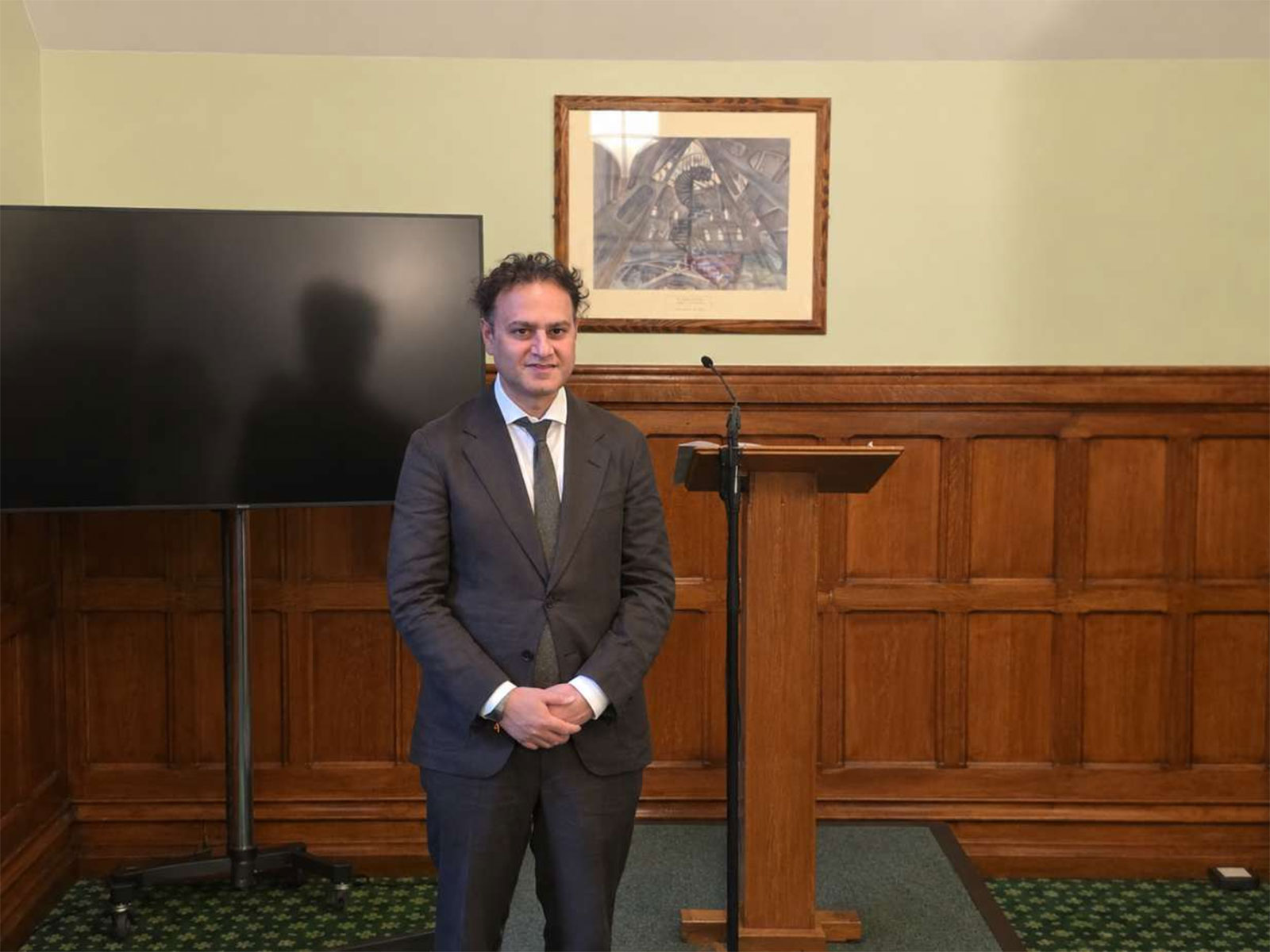
London [UK], October 28: Nitin Vats, Founder & CEO of PointAI, addressed “AI for a More Inclusive Tomorrow” at the House of Commons, Westminster, London, on 22 October 2026, sharing his journey from mathematical research to building Simulation AI and his vision for making advanced technology more accessible.
The event, presented by The Integration Foundation, was hosted by Dr Rupa Huq MP, Member of Parliament, UK House of Commons. Vineet Malhotra, Senior Journalist and Founder of Yellow Turf Media, chaired and moderated the session. The programme also featured panellists Tom Coates, Professor of Mathematics at Imperial College London and Founder & CEO of Bessemer AI, and Kir Nuthi, Head of AI and Data Policy at techUK.
In his address, Nitin Vats traced the ideas behind PointAI to an ambition to recreate elements of the physical world digitally, enabling people to visualise, interact with and experience products remotely. He described how this vision evolved into work on digital humans, digital twins, interactive product experiences and virtual try-on technology.
Nitin Vats emphasised the importance of original research and building proprietary technology from India for global markets. His address highlighted the role of mathematics and scientific problem-solving in developing AI systems that address practical needs.
Nitin Vats, Founder & CEO, PointAI, said: “The future of AI will not be decided only by who has the biggest model. It will be decided by who has the right mathematics, and the courage to prove it.”
PointAI’s work applies this approach to fashion and commerce through physics-based Simulation AI. Its technology models how garments behave on different body types, with the aim of helping shoppers assess clothing more realistically in digital environments. The company holds more than 70 granted patents across the United States, South Korea and India, spanning areas including virtual try-on, digital human generation, 3D product visualisation and interactive digital showrooms.
Beyond commerce, Vats outlined a longer-term vision for AI that responds to individual needs. He spoke about personalised education, where the same concept could be taught differently according to how each student learns and understands. He also reflected on accessibility and his interest in developing technology that helps people with visual impairments experience digital information.
His address further highlighted the importance of giving enterprises greater control over their data, outlining an ambition to develop AI systems that can operate within organisations’ own environments.
The House of Commons address brought together PointAI’s commercial work and its founder’s broader research ambitions, highlighting a vision for AI grounded in original invention, practical applications and wider access.
About PointAI
PointAI is a Simulation AI company developing physics-based technology for virtual try-on, 3D product visualisation and digital commerce. Its offerings include PointAI Platforms for enterprises and an Agentic Commerce App for shoppers. The company’s patent portfolio supports its work in creating interactive digital representations of people and products.
Website: https://www.pointai.com
(ADVERTORIAL DISCLAIMER: The above press release has been provided by VMPL. ANI will not be responsible in any way for the content of the same.)