Scaffolding the Future: Mayank Pathak's Mission to Modernize Construction Access
Feb 05, 2026
PNN
New Delhi [India], February 5: On most construction sites, scaffolding is treated as a temporary necessity. It arrives, does its job quietly, and disappears once the structure stands on its own. Yet in a country building at the scale and speed of India, these temporary systems carry permanent responsibility. Safety, precision, and project timelines often depend on how well construction access is planned and executed.
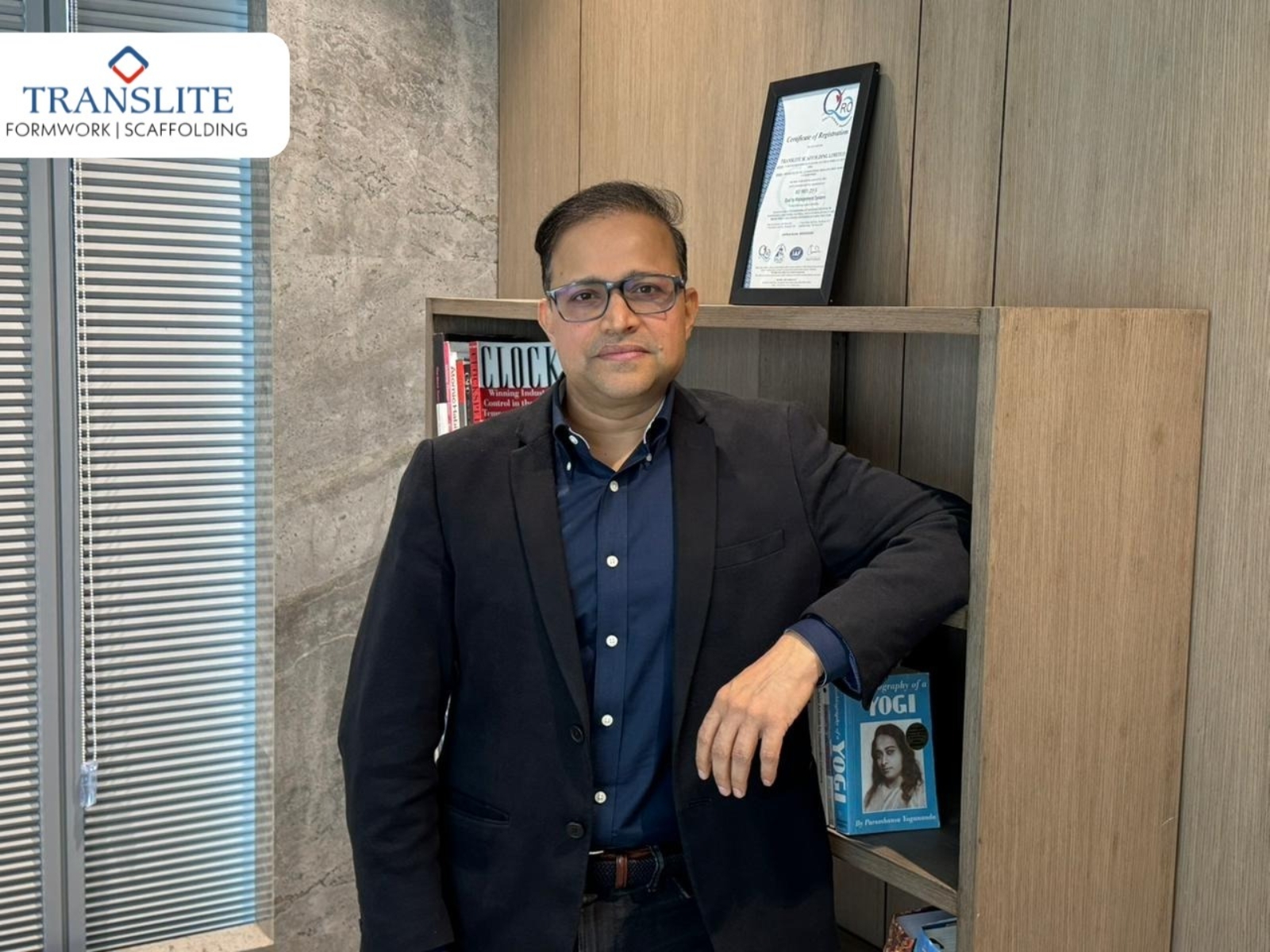
For Mayank Pathak, associated closely with Translite Scaffolding Ltd., this overlooked layer of construction has been central to how modern infrastructure should function. His work reflects a growing belief within the industry that scaffolding and formwork must move beyond ad-hoc solutions and become engineered systems that respond to the realities of today's projects.
Seeing What Others Often Miss
India's infrastructure expansion has reshaped expectations across the construction sector. Metro networks extend through crowded urban centres, expressways cut across varied terrain, and industrial facilities demand uninterrupted execution. In each of these environments, access systems influence how smoothly work progresses.
Mayank Pathak's involvement with Translite aligns with this shift in thinking. Rather than viewing scaffolding as a supporting afterthought, the emphasis has been on recognising its role in execution planning. When access systems are poorly coordinated, delays multiply. When they are thoughtfully designed, the entire construction process gains stability.
A Practical View of Modern Construction Access
Those working closely on infrastructure projects understand that complexity rarely comes from one factor alone. It comes from height, load, sequencing, and coordination happening simultaneously. Scaffolding and formwork sit at the intersection of all four.
Translite supplies and designs multiple scaffolding systems, including Cuplock and Ringlock, as well as H Frame and Kwik Stage scaffolding for housing and commercial oil, Industrial and natural gas sector requirements. Under Mayank Pathak's guidance, the focus remains on choosing systems based on site conditions rather than habit. Different projects demand different responses, and flexibility becomes essential.
Why Modularity Matters
One of the clearest shifts in construction access is the move toward modular systems. Projects today rarely progress in straight lines. Work areas change, access points move, and schedules tighten without warning.
Ringlock scaffolding systems, manufactured with consistent dimensions and fixed spacing, support this reality by allowing predictable assembly and load behaviour. Modular systems reduce the need for on-site improvisation, which is often where inefficiencies and risks emerge. This approach reflects a broader mindset shift that Mayank Pathak has consistently supported: build access systems that adapt as the project evolves.
Planning Before the First Component Is Erected
Behind every successful scaffolding setup is planning that begins long before materials reach the site. Translite's scope includes design of scaffolding and formwork systems along with load calculations tailored to project requirements.
This planning becomes especially important for structures such as pier caps, bridge girders, metro viaducts, and elevated decks. These elements place uneven and dynamic loads on temporary structures. Addressing such challenges through design allows access systems to integrate more seamlessly into the construction sequence.
Mayank Pathak's emphasis here remains clear. Problems solved at the design stage are far easier to manage than those discovered midway through execution.
Safety Through Consistency, Not Shortcuts
Construction safety is often discussed in terms of rules and enforcement. While necessary, these alone do not prevent instability. Consistent systems and predictable behaviour play a larger role than is often acknowledged.
Scaffolding components supplied by Translite are fabricated using mild steel and manufactured in accordance with ISO 9001:2015, IS 1161, and IS 2062 standards. Standardisation ensures that components behave uniformly, allowing teams to rely on the system as a whole rather than compensating for inconsistencies.
This disciplined approach aligns with Mayank Pathak's broader view that safety improves naturally when engineering decisions are deliberate rather than reactive.
Working Across Diverse Project Environments
Modern infrastructure does not follow a single template. Urban metro projects, highway structures, industrial plants, and large campuses each present different site realities. Scaffolding and formwork systems must respond accordingly.
Translite's systems have been applied across metro projects, expressways, industrial facilities, and institutional developments, including office campuses and manufacturing plants. While each environment introduces unique challenges, the underlying philosophy remains consistent: plan carefully, choose the right system, and execute with discipline.
Learning Beyond Domestic Boundaries
Supplying scaffolding materials to GCC markets such as the UAE and Saudi Arabia introduces additional layers of expectation. Consistency in fabrication, inspection, and delivery becomes non-negotiable.
This international exposure reinforces quality practices that also strengthen domestic work. For Mayank Pathak, such alignment between markets reflects the importance of maintaining the same engineering discipline regardless of geography.
A Measured Path to Modernisation
In an industry often drawn to new trends, Mayank Pathak's approach remains measured. Modernising construction access does not depend on unverified technologies or dramatic reinvention. It depends on getting the fundamentals right: modular systems, clear planning, and consistent fabrication.
By focusing on these principles through his association with Translite, scaffolding and formwork are positioned not as temporary inconveniences, but as quiet enablers of safer and more reliable construction.
As India continues to reshape its built environment, it is these unseen systems and the people who insist on improving them that will quietly determine how well the structures of tomorrow are built.
(ADVERTORIAL DISCLAIMER: The above press release has been provided by PNN. ANI will not be responsible in any way for the content of the same.)